

Feasting Bulgarian-Style: Holiday Foods and Traditions at the Table
In Bulgaria, food is more than nourishment—it is celebration, connection, and culture. Throughout the year, Bulgarians mark major holidays, name days, and family occasions with rich culinary traditions that reflect their deep-rooted values and Orthodox Christian heritage. From the meatless spread of Christmas Eve to the springtime lamb roast of St. George’s Day, every dish has a story, and every table becomes a stage for celebration.
A Sacred Spread: Christmas Eve’s Ritual Meal
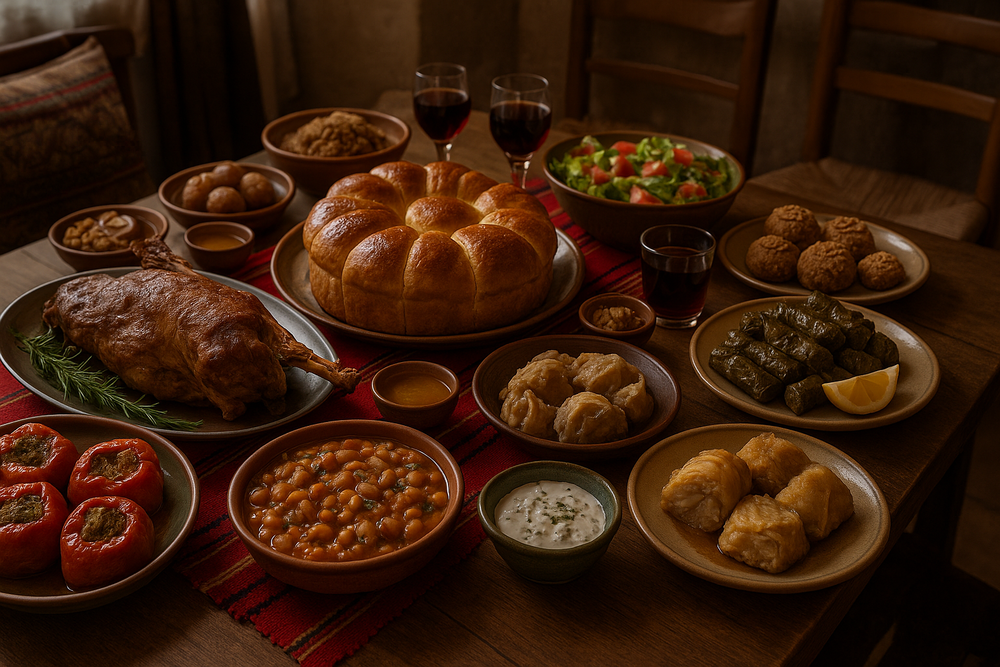
Christmas Eve (Badni Vecher) is one of the most spiritually significant evenings in Bulgaria. Observant families prepare an odd number of entirely meatless dishes—usually 7, 9, or 11—to honor the fasting period before Christmas Day. The meal may include stuffed peppers with rice, beans cooked with savory herbs, pickled cabbage rolls, boiled wheat with sugar and walnuts, and honey-drenched pastries. Each dish symbolizes abundance, health, and fertility.
At the center of the table sits the homemade pitka—a round bread baked with a hidden coin inside. The bread is broken, not cut, by the eldest member of the household. Whoever finds the coin is believed to have luck and prosperity in the coming year. The meal often begins in silence, with prayers or blessings, emphasizing gratitude and family unity.
Welcoming Spring: St. George’s Day and the Lamb Feast
As winter fades and spring blooms, Bulgarians celebrate St. George’s Day (Gergyovden) on May 6th—a holiday that honors soldiers and farmers alike, as well as the patron saint of shepherds. Central to the celebration is the roasting of a whole lamb, a nod to the agricultural roots of Bulgarian life and a symbol of renewal and protection.
The lamb is often seasoned with garlic, fresh herbs, and sometimes stuffed with rice and liver. Served with green salads, yogurt-based dips like ayran, and fresh bread, the meal is traditionally enjoyed outdoors, accompanied by music and dancing. The holiday also coincides with name days for many Bulgarians named Georgi, Gergana, and related names, adding another layer of festivity.
Name Days and Family Feasts
In Bulgaria, name days (imen den) are sometimes celebrated with more enthusiasm than birthdays. Each name corresponds to a saint’s day in the Orthodox calendar, and it’s customary for the person celebrating to host friends and family, often without sending invitations—guests just show up, bringing flowers, wine, or sweets.
The food varies, but expect hearty dishes like banitsa (cheese-filled filo pastry), grilled meats, rich stews, and homemade rakia (fruit brandy). The atmosphere is warm and spontaneous, with plenty of toasts and laughter.
Whether it’s a religious holiday or a simple family gathering, Bulgarian feasting traditions reflect the importance of hospitality, ritual, and community. Every meal tells a story, every dish carries meaning, and every guest is family.